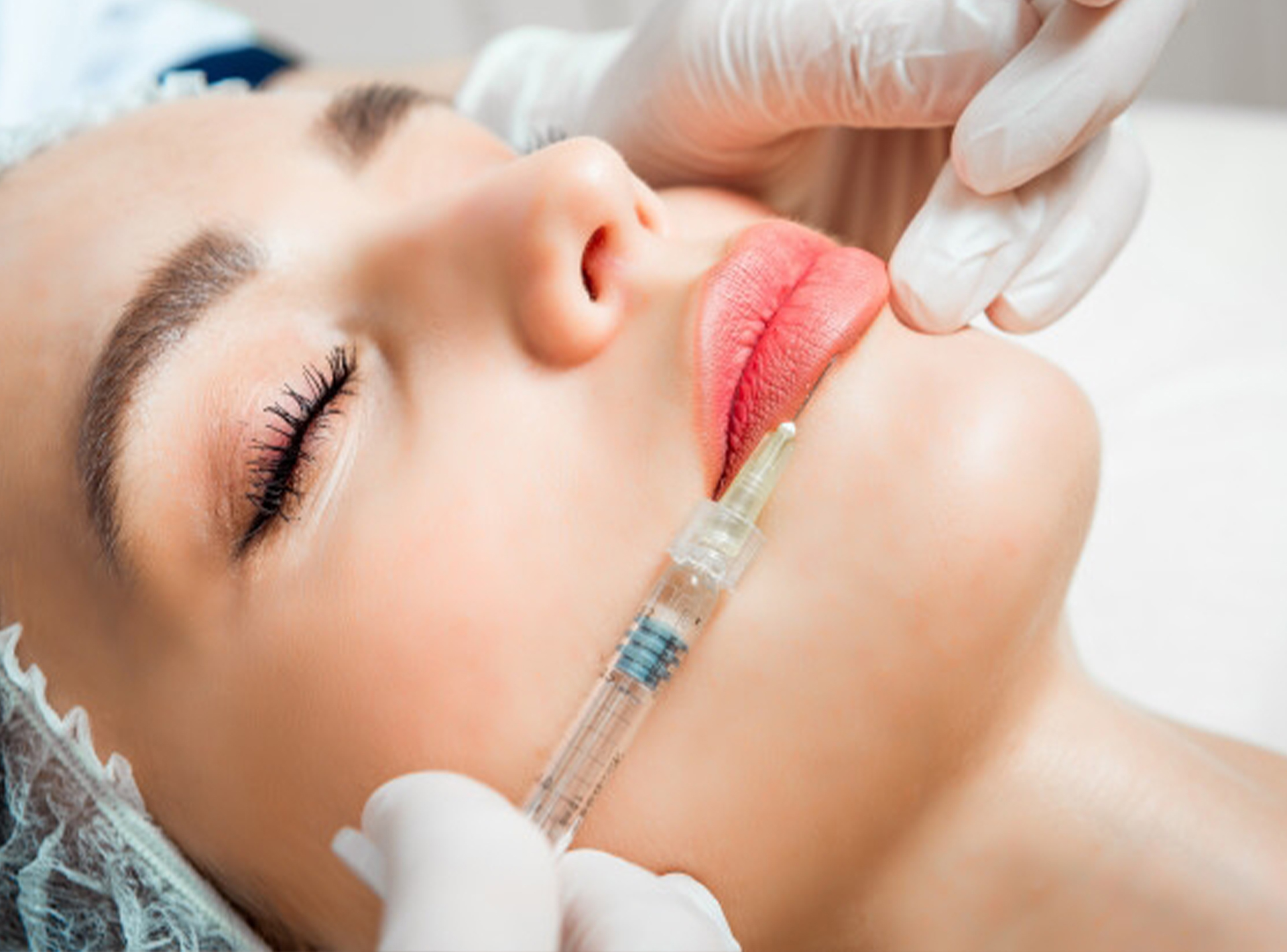
Botox is a non-surgical treatment that softens expression lines and slows the formation of new ones. I perform it at my clinic in Nişantaşı, Istanbul; my aim is a more rested look without a frozen face.
What is Botox and how does it work?
Botox (botulinum toxin type A) temporarily reduces the signal from the nerve endings to the muscle. When the muscle contracts less, the skin above it stops creasing; existing lines soften and new ones deepen more slowly. That is why Botox is both a treatment and a preventive measure.
Is Botox harmful?
Botox performed by an experienced physician at an appropriate dose is safe. It has been used in medicine since the late 1970s: first to treat strabismus, and soon after to relieve muscle stiffness in children with cerebral palsy. Today it is used safely even in children. The doses we use in aesthetics are far lower than these medical doses. Side effects are usually temporary: mild bruising at the injection site or a short-lived headache, and rarely a drooping eyelid.
Does Botox spread into the bloodstream?
No. Botox binds to the nerve endings in the muscle where it is injected and acts only in that area. Because aesthetic doses are very low, it has no effect on the rest of the body.
Which areas can Botox be used on?
- Horizontal forehead lines
- Frown lines between the eyebrows
- Crow’s feet at the corners of the eyes
- A gentle lift of the brow tail (Botox brow lift)
- Masseter (chewing muscle): slimming the jaw angle and reducing teeth clenching
- Vertical neck bands (platysmal bands)
- Excessive gum show when smiling (gummy smile)
- Excessive sweating (hyperhidrosis): especially underarms and soles of the feet
- Nose: drooping of the nasal tip when smiling and wrinkles on the bridge of the nose (bunny lines)
Can Botox be used for neck bands?
Yes. Botox can be used to relax the vertical bands of the neck. It does not help with horizontal neck lines.
Can Botox be used on the nose?
Yes. If the tip of the nose drops when you smile, Botox injected into the small muscle that pulls the tip down (depressor septi nasi) reduces this drop. For the wrinkles that form on the bridge of the nose when smiling (bunny lines), a small amount of Botox in the nasal muscle (nasalis) softens these lines.
When does Botox start to work?
The effect begins within 2-3 days and the full result settles in 10-14 days. That is why we assess the result at the two-week mark.
How long does Botox last?
Usually 3-4 months.
How many times a year should Botox be done?
I recommend regular treatment 3-4 times a year. With regular treatment the muscles grow weaker, so the effect lasts longer. Even if you take a break, the wrinkles do not deepen as much as before. Botox for sweating lasts longer, so I perform it twice a year.
At what age should you start Botox?
I look at the expression lines rather than a specific age. If lines are visible even when the face is at rest, Botox becomes an option; this usually happens after the age of 25-30. Starting early with a low dose prevents the lines from becoming permanent and deeper.
Will my face look frozen after Botox?
No. I adjust the dose to the muscle structure of your face; the lines soften while your expressions are preserved. For those who want a lighter result, I use a low-dose “baby Botox”.
Is Botox done differently in men?
Yes. Men have stronger muscles and a different brow shape. I choose doses and injection points that preserve the straight, masculine position of the brow.
What is bruxism and why should it be treated?
Bruxism is the involuntary clenching or grinding of the teeth. It mostly happens during sleep, sometimes during the day with stress, and people are often unaware of it.
Left untreated, it affects both the teeth and the shape of the face. Constant clenching can cause tooth wear, cracks and fractures, jaw joint pain and morning headaches. The constantly working chewing muscle (masseter) enlarges, and the lower face widens into an angular, square and more masculine shape.
Botox in the masseter relaxes the muscle; clenching and grinding decrease and the teeth are protected. As the muscle shrinks over time, the jaw angle slims, the oval of the face becomes more defined and the face takes on a more feminine contour.
How often should masseter Botox be done?
In the first year I treat every 3 months, that is, 4 times a year. In the following years I treat less often, depending on muscle activity.
Does masseter Botox affect the smile?
Not when it is placed at the right point. The masseter lies very close to the risorius, the muscle that pulls the corner of the mouth sideways when you smile. If Botox is injected at the wrong point or spreads into this muscle, the smile can be affected. That is why I inject into the lower and back part of the masseter, away from the risorius. In the first 1-2 weeks you may feel slight weakness when chewing hard foods, and this passes.
Will masseter Botox make my cheeks sag?
In most patients, no. However, as the muscle shrinks it gives less support to the tissue above it; in people with a thin face, loose skin or existing cheek sagging, the cheek may look slightly hollow or saggy. At the consultation I assess skin quality and facial volume; for patients at risk of sagging I recommend masseter Botox combined with jawline filler. For these patients I also perform three sessions of microneedling radiofrequency with Scarlet X, which tightens the skin and prevents sagging.
I clench my teeth, but after Botox the corners of my mouth sag. What should I do?
You do not need to stop treating the clenching. In this case I combine masseter Botox with jawline filler. The filler replaces the support lost as the muscle shrinks, so your teeth stay protected and the corners of the mouth do not sag.
What is Botox used for outside aesthetics?
Botox was used in medicine long before aesthetics, to treat involuntary muscle contractions. Today it is used by physicians of the relevant specialties for chronic migraine, eyelid twitching (blepharospasm), involuntary neck muscle contractions (cervical dystonia), muscle stiffness after stroke (spasticity), overactive bladder and some types of strabismus.
Which Botox brands do you use?
Only original FDA- or CE-approved products (such as Botox, Dysport and Xeomin). Unapproved products may contain a different amount of active ingredient; the effect may be short-lived or asymmetry may occur. Botox must be stored between +2 and +8 °C, diluted at the correct ratio and used within a set time.
How long does a Botox treatment take, and does it hurt?
The treatment takes about 10 minutes. Because very fine needles are used, you only feel a slight prick. You can return to social life right away.
What should I pay attention to before and after Botox?
- Stop blood thinners and alcohol 24 hours before; come without make-up
- Do not bend over or lie down for the first 4 hours after treatment
- Avoid sauna, hammam and exercise for 24 hours
Should I massage the area after Botox?
No, the area should not be massaged. Massaging or pressing the area in the first days after treatment can spread Botox to unwanted muscles and cause asymmetry.
Is there a check-up and touch-up after Botox?
Yes. I see you for a check-up at two weeks. At this visit I assess the position of the brows, correct any asymmetry and, if needed, fine-tune the result with a small touch-up.
Is there a drug that reverses Botox?
No. Once Botox binds to the nerve endings, there is no drug that cancels its effect; it wears off by itself within a few months. This is why I plan the dose and injection points carefully from the start. In the rare case of a drooping eyelid, eye drops that temporarily lift the lid can be used until the effect wears off.
Can Botox replace fillers?
No, they do different jobs. Botox softens expression lines by reducing muscle movement; filler restores lost volume. We plan them together when needed. For details, see the Fillers page.
I have drooping eyelids. Should I have Botox or surgery first?
Surgery first. People with drooping eyelids unknowingly raise their forehead to see; some of the forehead lines form for this reason. If Botox is injected into the forehead first, the person can no longer raise the brows, and the drooping eyelid becomes more bothersome. That is why I perform eyelid surgery first and plan Botox once healing is complete.
Who should not have Botox?
I do not perform Botox in the first three months of pregnancy, in neuromuscular diseases such as myasthenia gravis, or if there is an infection in the treatment area.
We decide on the right plan for you together at the consultation. To book an appointment, please reach us through the contact page.
Last updated: